Show up on June 3. Bring their words back to them.
Cloverleaf's June 3 community open house is the meeting residents have demanded for months. It is designed to minimize confrontation. Show up. Bring the questions. Ask for every answer in writing.
Long-form dispatches from #45strong on Project Red Clay, alongside press coverage and reporting on what hyperscale data centers have done to other communities. Every item includes a one-sentence read on what it means for Lowndes.
Cloverleaf's June 3 community open house is the meeting residents have demanded for months. It is designed to minimize confrontation. Show up. Bring the questions. Ask for every answer in writing.
The full file on Cloverleaf Infrastructure: a developer that has never operated a data center, runs secret talks with local officials, makes promises that bind no eventual operator, and treats withdrawals as pauses. The company now wants Lowndes to commit thirty years of tax base to an unnamed tenant.
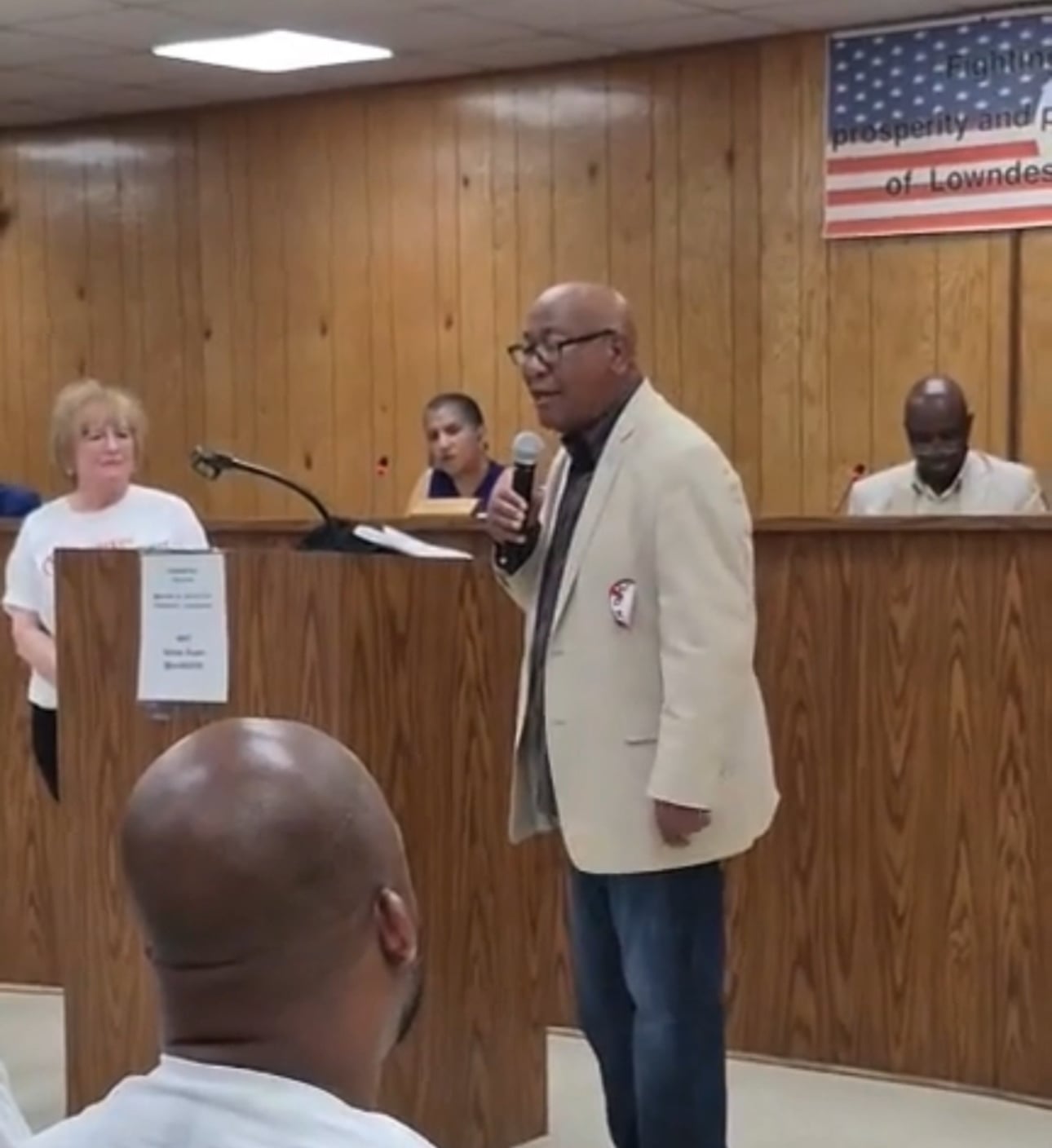
The survey strings are tied to Rev. Tom Garner's back fence. He told the Commission the developer is like a man who built a house who does not know who will live in it, and closed with two words: don't give up.
In an op-ed, Lt. Governor candidate Phillip Ensler calls for a statewide moratorium on data center construction, arguing approvals are moving with alarming speed and without transparency or opportunity for public input. He writes that citizens should be able to vote on whether they want a data center in their community, citing risks to utility bills, clean water, farming, and livestock.
Cloverleaf Infrastructure announces a community open house for Project Red Clay in Lowndes County. The company is presenting the event as an opportunity for residents to learn about the proposed hyperscale data center near Burkville.
Cloverleaf Infrastructure will host a come-and-go community open house at Hayneville Middle School on Wednesday, June 3, 2026, from 5:30 to 7:30 p.m. CT. Cloverleaf staff and subject-matter experts will be stationed at informational tables on water, energy, noise, lighting, and economic impact. The event has no formal presentation; refreshments will be provided.
Lowndes is being asked to grant a 30-year tax break to a company that has not been named. Cloverleaf is not the operator. They are flipping the site.
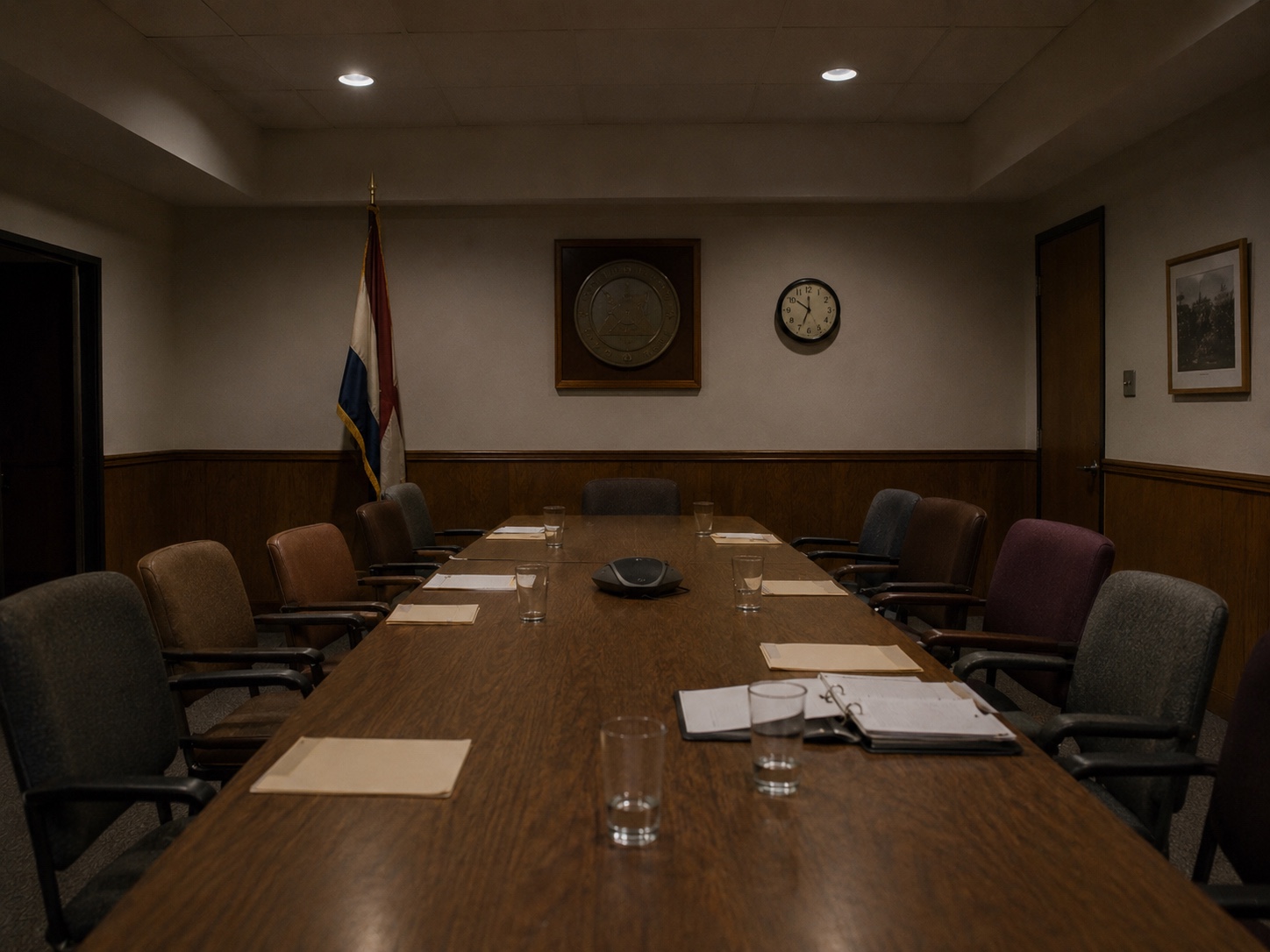
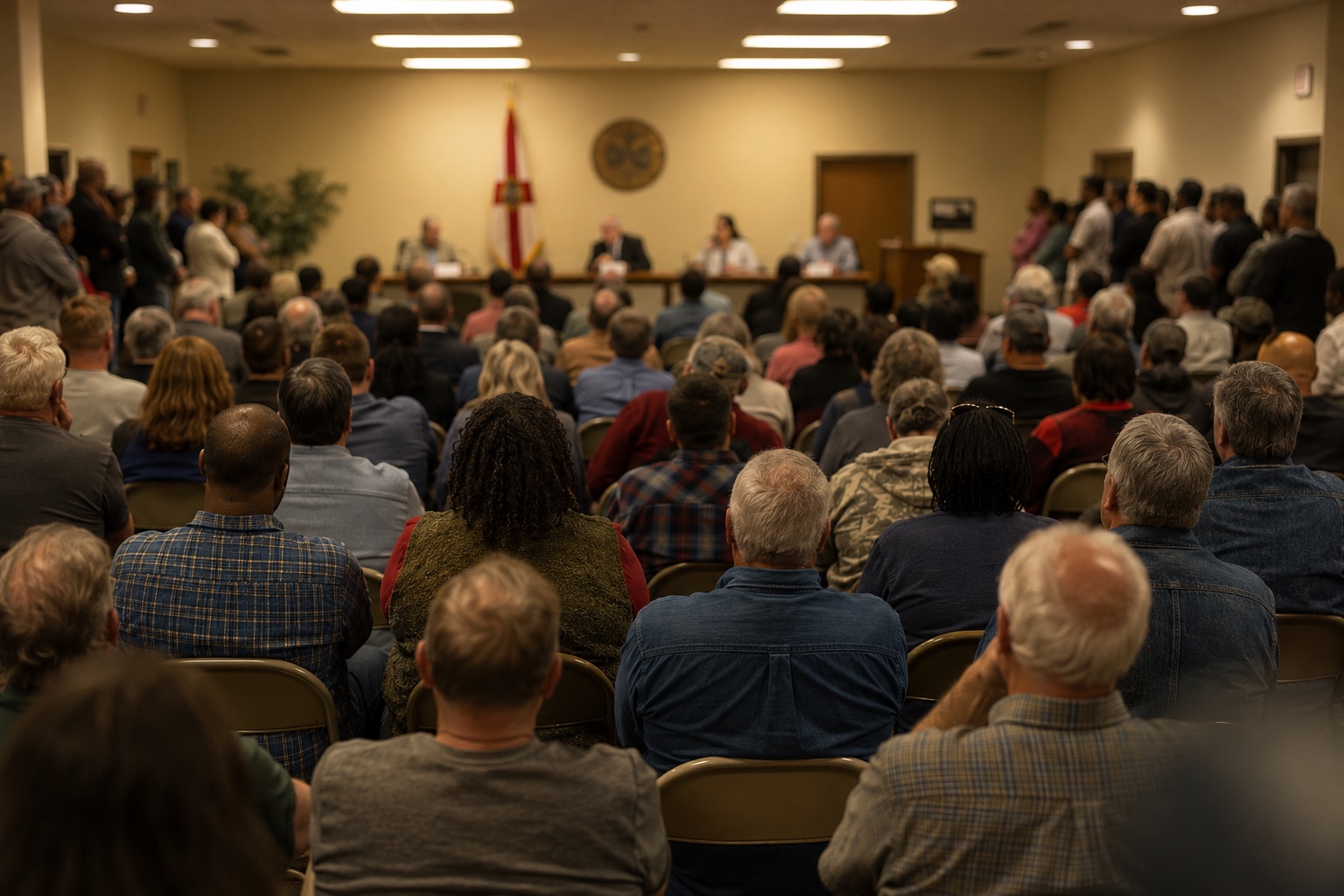
Another standing-room-only crowd packed the May 26 Commission meeting, delaying the start by more than 20 minutes. Four residents spoke against Project Red Clay, citing SABIC chemical emissions, the site's location one mile from Gardner's Farm Campsite on the civil rights trail, and strain on infrastructure serving roughly 215 homes within two miles. Ann Faulkner asked Chairman King to recuse over his LCEDC role. King pledged to oppose any 30-year abatement, then voted against Vice-Chairman Farrior's motion to deny abatements; Harris and Hayes abstained.
$2,500 a year buys a voting seat on the body recruiting Project Red Clay. Its President sits on the Pintlala Water board that would supply the data center. No written conflict-of-interest policy.
Cloverleaf wrote down, in a Michigan FOIA email, exactly when they walk away from a data center: "ten times out of ten" if it is unwelcome or does not match existing land use. Lowndes fails both halves.
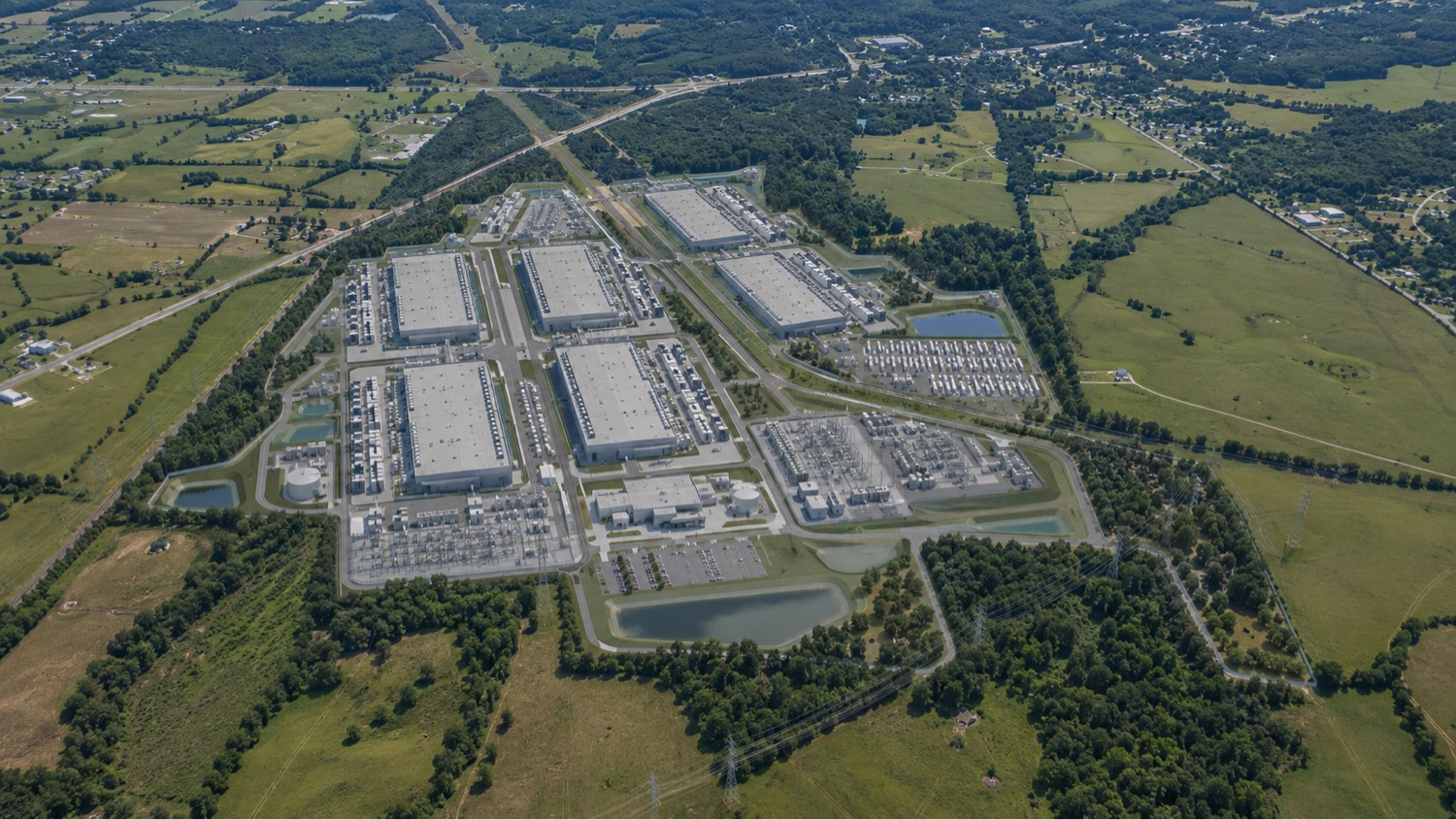
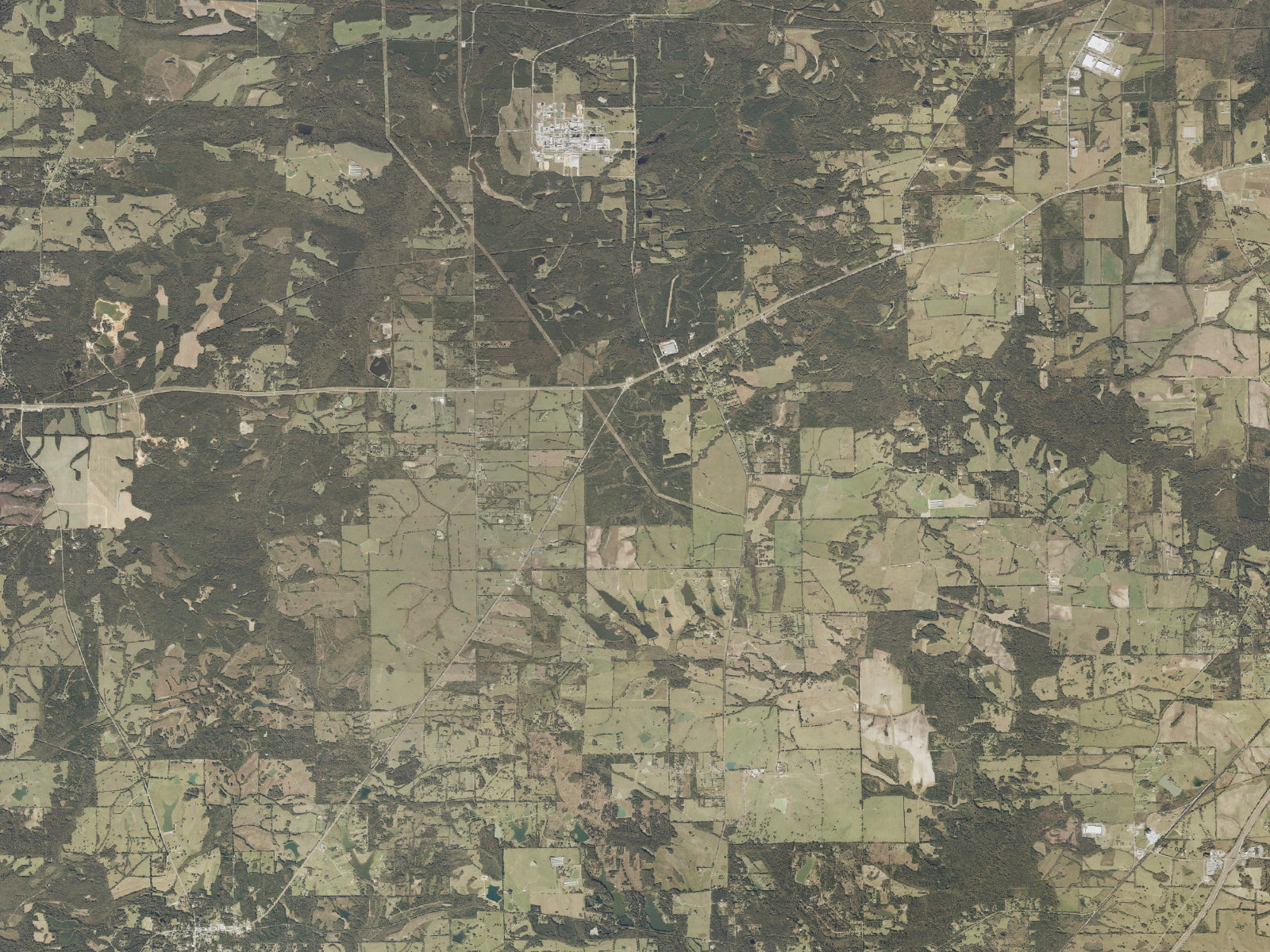
One mile from a campsite on the Historic Selma to Montgomery Civil Rights Trail. 800 yards from a 54-home neighborhood. That is where Cloverleaf wants to build a 5M sq ft data center.
On official Town of Lowndesboro letterhead, Mayor Edward S. McCurdy, Jr. writes on behalf of himself, the Town Council, and the citizens of Lowndesboro to formally oppose the proposed 800-acre data center at U.S. 80 and Alabama 21, and respectfully urges the Lowndes County Commission to deny approval. The letter is addressed to Commissioner Robert Harris (District 1) and cc'd to Chairman King, Vice Chairman Farrior, Commissioner Hayes, and Commissioner Barganier.
Commission Chairman Charlie King Jr. tells WSFA the project 'could create opportunities many residents need.'
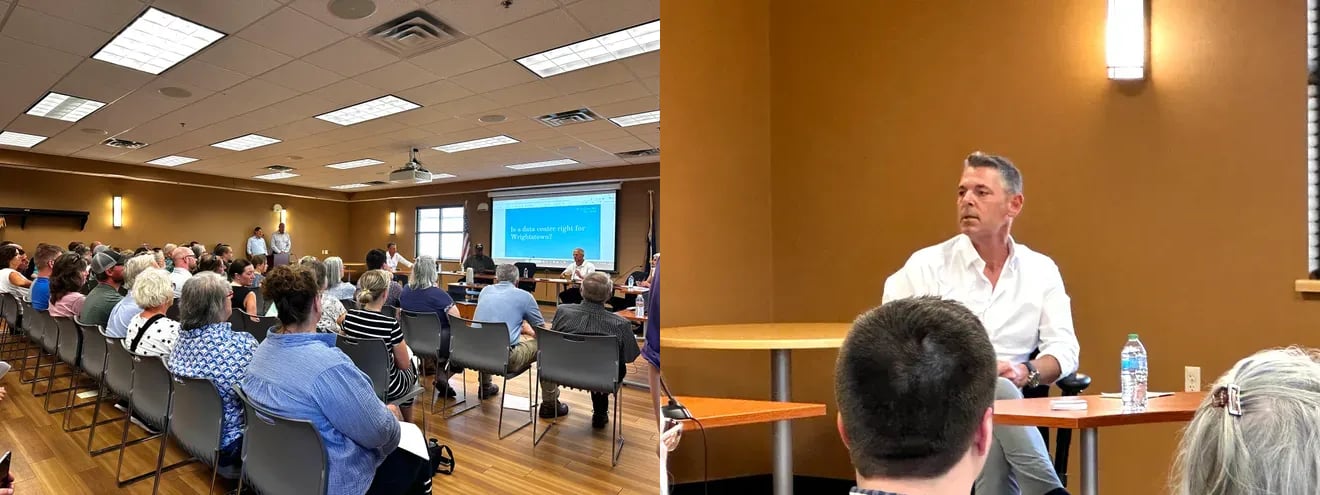
The April 28 town hall at the Charles Smith Building filled the room and forced residents to stand outside. WSFA documents the scale of organized opposition.
First-person reporting from residents downwind of hyperscale data centers in Northern Virginia and Michigan describes headaches, vertigo, sleep disturbance, hypertension, and ear pain.
Cloverleaf executives describe a closed-loop cooling system, project the facility will 'sit there quietly,' and assert no impact on current ratepayers. Commissioner Dickson Farrior's anti-abatement motion failed after Commissioner Robert Harris moved to defer.
Judge Adrian Johnson, a 23-year resident, describes a 5-million-square-foot facility roughly three times the power consumption of the entire county and points to Meta's Hope Hull data center 12 miles away as Montgomery's single largest water user.
Grayson Everett reports an 800-plus-acre site being positioned for an unnamed data center tenant, with Cloverleaf in talks with local officials and residents organizing in response.
Diesel backup generators at hyperscale data centers emit 200 to 600 times more nitrogen oxides than equivalent natural-gas plants. During grid outages, a single facility can release a full year of permitted emissions in days.
Cloverleaf's $10 million community-benefits pledge is structured as $1 million up front, $4 million after the Energy Services Agreement and PSC approval, and $5 million over five years post-construction-start.
The first Lowndes Signal briefing on the project frames it as a $1.5 billion investment and projects $75 million per year in net tax revenue, citing utility assurances that current ratepayers will not be impacted.
WTXL covers the early organizing meetings and frames the Lowndes pushback in the context of more than 140 active opposition groups across 24 states.
Cloverleaf's funding announcement confirms NGP Energy Capital and Sandbrook Capital as the private-equity backers and names Brian Janous, David Berry, and Jonathan Abebe as founders.
No state in the U.S. reports both jobs promised and jobs actually created at subsidized data centers. Illinois averages $1.4 million in public subsidy per data-center job. Georgia, Virginia, and Texas each lose over $1 billion per year to data-center tax breaks.
The Virginia State Corporation Commission approves a new electricity rate class for large-load customers above 25 MW, effective 2027. Typical Dominion residential customers face $11.24/month more in 2026 driven by data-center load. PJM capacity-market clearing prices rose 833 percent for 2025-2026.