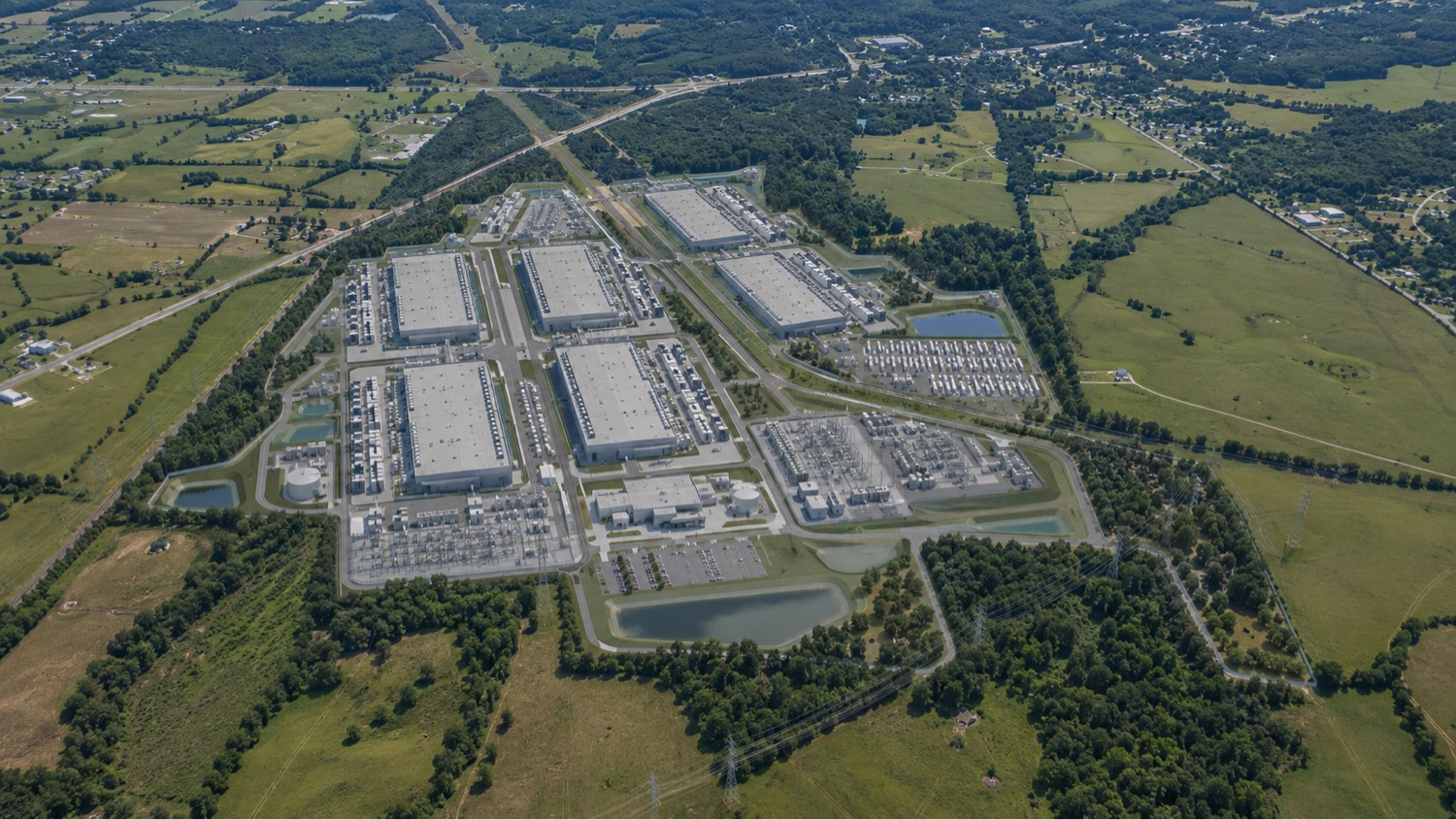
Cloverleaf Infrastructure is not the company that would own and operate Project Red Clay. Cloverleaf is a two-year-old Houston-based land developer that assembles parcels and flips them to hyperscalers. The Lowndes County Commission is being asked to vote on a thirty-year tax break for an industrial campus whose actual operator has not been disclosed, named, or signed.
The vote, and the absence.
The Lowndes County Commission is being asked to approve a thirty-year property-tax abatement for a 1,000-acre data-center campus described to residents as approximately five million square feet.1 The company that would own the campus, sign the water contract, sign the power agreement, hire the staff, and pay the operating bills has not been named in any public filing or any public meeting. Cloverleaf Infrastructure, the developer requesting the abatement, will not be that company.2
This is the simplest and the least examined fact about Project Red Clay. Whoever the operator is, they have not been introduced to Lowndes County.
What Cloverleaf is, and is not.
Cloverleaf Infrastructure is a two-year-old, Houston-based company that describes itself as a developer of clean-powered, ready-to-build sites. The company acquires land, secures interconnection queue positions and substation upgrades, and sells the assembled package to a hyperscale operator.3 The industry term for the product is powered land. Cloverleaf's stated national target is ten to fifteen gigawatts of peak power capacity across all sites.4
Cloverleaf does not build, own, or operate data centers. That is not a critique. It is the business model.
What “operator” actually means.
The operator of a hyperscale data-center campus is the entity that signs the long-term contracts that matter. The operator signs the power purchase agreement with the utility. The operator signs the water-service agreement with the local provider. The operator hires the security, maintenance, and facility staff. The operator pays the property-tax bill. The operator owns the buildings and the equipment inside them. The operator is the company that the abatement is functionally granted to.
Cloverleaf packages the parcel, holds the option, and exits. The thirty-year tax break is the central asset Cloverleaf is assembling. When the package sells, the abatement transfers to the buyer. The buyer becomes the operator. The buyer was not in the room when Lowndes County voted.
What voting on an unnamed company means.
Every concession Cloverleaf has publicly offered Lowndes is offered by Cloverleaf, not by the operator. The ten-million-dollar community-benefits pledge routed through the Central Alabama Community Foundation is Cloverleaf's pledge. The closed-loop cooling description is Cloverleaf's description. The hundred-vehicle-trips-per-day estimate is Cloverleaf's estimate. The “sit there quietly” characterization is Cloverleaf's characterization.5 None of these commitments bind the operator. Cloverleaf's signature does not transfer with the parcel.
Lowndes is being asked to grant a thirty-year tax break in exchange for promises made by a company that, by the time most of the abatement is in effect, will no longer own the site.
The Port Washington precedent.
The clearest documented execution of the powered-land model is Port Washington, Wisconsin. Cloverleaf assembled approximately 1,900 acres in and around Port Washington and steered the annexation through the city in May 2025. The package was then handed to Vantage Data Centers for an $8 billion campus build.6 The Port Washington Common Council approved the deal based on Cloverleaf's representations. Vantage is the entity that now signs the operator-level commitments. Cloverleaf is the entity that took the markup on the assembly and exited.
Port Washington voters have since approved a ballot measure requiring voter approval for any tax incentive on future data-center projects.7 The people who said yes the first time are now writing the rules to slow the next version down. The Port Washington pattern is precisely the pattern Cloverleaf is now asking Lowndes to repeat.
Why the operator cannot be named on Cloverleaf's timeline.
The operator does not sign before the abatement. The operator signs after. The reason is structural: the abatement is the single most valuable component of the powered-land package Cloverleaf is assembling. A 1,000-acre site under option, with an executed thirty-year tax break, is materially more valuable on the flip than a 1,000-acre site under option without one. The order of operations is the deal.
Cloverleaf has applied the same logic to public engagement. When asked about a community-facing public meeting in Lowndes, the company's Red Clay project manager told The Lowndes Signal the meeting could come “at a later stage of project development.”8 The underlying reasoning is the same: disclosure happens after the instrument has been locked in, not before. The county would be asked to vote without the operator on the page for exactly the reason Cloverleaf would prefer to talk after the vote.
What the Commission can ask for, on a single page.
This is the first of the 45strong coalition's five demands, and it is the least negotiable. Tenant disclosure in writing, signed by the operator, before any Commission vote on any abatement. The disclosure is not aspirational. It is the minimum condition under which the Commission has a vote it can actually take. Voting on an unnamed company is voting on a document Cloverleaf can revise after the fact.
The four other coalition demands flow from the same logic. Water transparency, ratepayer protection, an education-tax carve-out, and a tenant-binding community-benefits agreement all require an operator on the page. The first demand is the gate.
The ask.
Before any abatement vote, Cloverleaf and the operator-tenant must jointly disclose, in writing, who the operator is, what the contracted water and power demand is, and what binding commitments the operator (not the developer) makes to Lowndes County. If Cloverleaf will not name the tenant, the Commission has no instrument to vote on. If they will, the conversation can start.
The deadline is Cloverleaf's. It is not the county's.