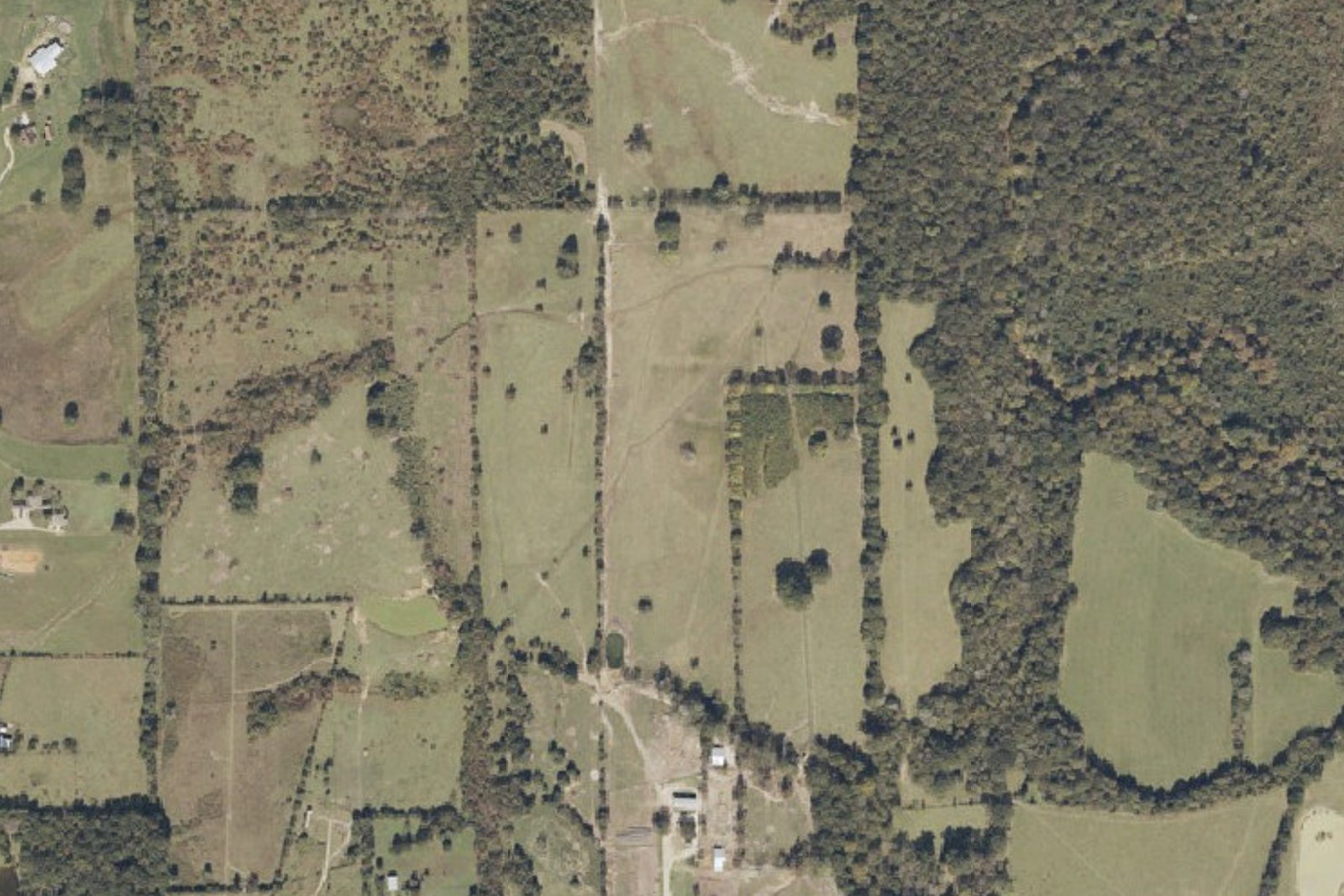
What Cloverleaf says.
Cloverleaf's pitchman, Aaron Bilyeu, has told residents the cooling will be “closed-loop” — comparable, in his words, to “the same as a small office building.”W1 The implication is that water consumption is a non-issue.
What that leaves out.
“Closed-loop” describes one cooling circuit inside the building. The data center as a whole still consumes makeup water for the loop, evaporates water from cooling towers if installed, and consumes water indirectly through the power plants that serve it. Industry research from the World Resources Institute shows large hyperscale facilities draw 3 to 7 million gallons per day at peak — roughly the residential water demand of a town of 10,000 people.W2
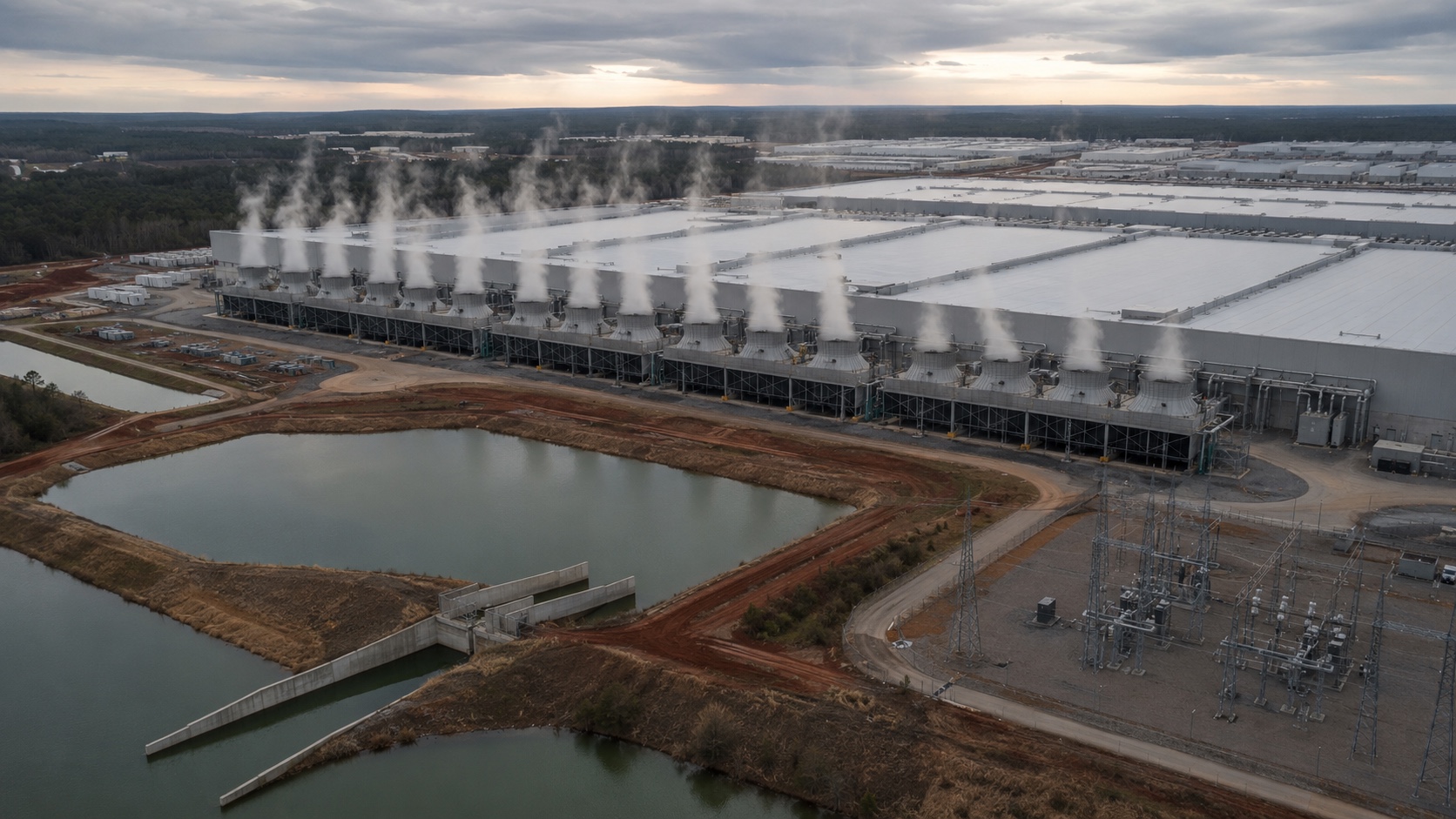
The Hope Hull comparable.
The Meta data center at Hope Hull, twelve miles from Burkville, is approximately 1.3 million square feet. It is already the single largest user of water in the Montgomery water system.W4 The Project Red Clay facility, as described to residents by Cloverleaf, would be approximately five million square feet — nearly four times the Hope Hull footprint.W5
Where does that water come from? Cloverleaf has not said. The project application does not specify the source, the volume, or the agreement to supply it. The “end tenant” who would actually own and operate the facility — and who would actually contract for the water — has not been disclosed.W6
What it means for Lowndes County.
- Wells. Many Lowndes County residences depend on private wells for drinking water. Large industrial water draws have been documented to lower local water tables.
- Municipal systems. If the facility is served by a municipal supplier — as Hope Hull is — that supplier's other customers (residential ratepayers, hospitals, schools, farms) compete for the remaining capacity.
- Drought resilience. A 5M-sqft hyperscale facility with 24/7 cooling demand does not flex during drought the way residential and agricultural users do. The facility's contracts come first.
The question for the Commission.
Before this is approved: peak and average daily water demand, in gallons, in writing, in the filing. The source — Alabama River? Montgomery's system? Groundwater? — and a binding supply agreement. Until that question has a written answer, there is nothing to vote on.