The lived experience comes first.
Before any property value calculation, there is a much simpler question: what is it like to live next to this? U.S. News' April 2026 reporting from neighbors of hyperscale data centers in Northern Virginia and rural Michigan answers it. The headline they chose: “Living in Hell.” The reported symptoms cluster: continuous low-frequency hum audible inside the home, sleep disruption, headaches, vertigo, hypertension, ear pain.Q1 EESI documents that sustained sound above 65 dB raises stress and blood pressure even when the listener has adapted to it.Q2
Add to that: 24-hour security lighting at the property line that bleeds into adjacent yards and bedrooms; round-the-clock truck and service vehicle traffic on the access roads; the visual scale of a multi-million-square-foot industrial campus dropped into a wooded rural setting; cooling-tower vapor plumes; periodic generator testing that residents describe as disruptive even at the scheduled-test cadence.
What the property-value research actually says.
We will not overclaim here. The most rigorous recent research on adjacent home values comes from George Mason University's Schar School (November 2025), studying 2023 home sales in Loudoun, Fairfax, and Prince William counties — the heart of Northern Virginia's “Data Center Alley.” The study found that, in that market, homes closer to data centers tended to sell for higher prices, not lower.Q4
The Schar School authors themselves note the caveat: Northern Virginia is a market with severe pent-up housing demand, where almost any home, in almost any condition, near almost any neighbor, sells. “Northern Virginia is a different kind of residential market that might mask effects.” The study's authors explicitly recommend further research in markets that don't have NoVA's demand profile.
Lowndes County is not Northern Virginia. The honest position is: the academic research on rural property values adjacent to hyperscale data centers is thin. We do not have a peer-reviewed study from a market that resembles ours. What we do have: first-person accounts from residents who lived through the before-and-after, and uncontested documentation of the noise, light, traffic, and air-quality changes they experienced.
What changes for a Lowndes County resident.
- Sound floor. Continuous mechanical hum audible at residences within at least one mile, more under certain weather.
- Night sky. 24-hour exterior lighting on the 1,000-acre site. Skyglow visible across the county at night.
- Traffic. Construction-period truck traffic on U.S. 80 and AL 21 for 24+ months; ~100 vehicle trips per day during operation, by Cloverleaf's own number.Q5
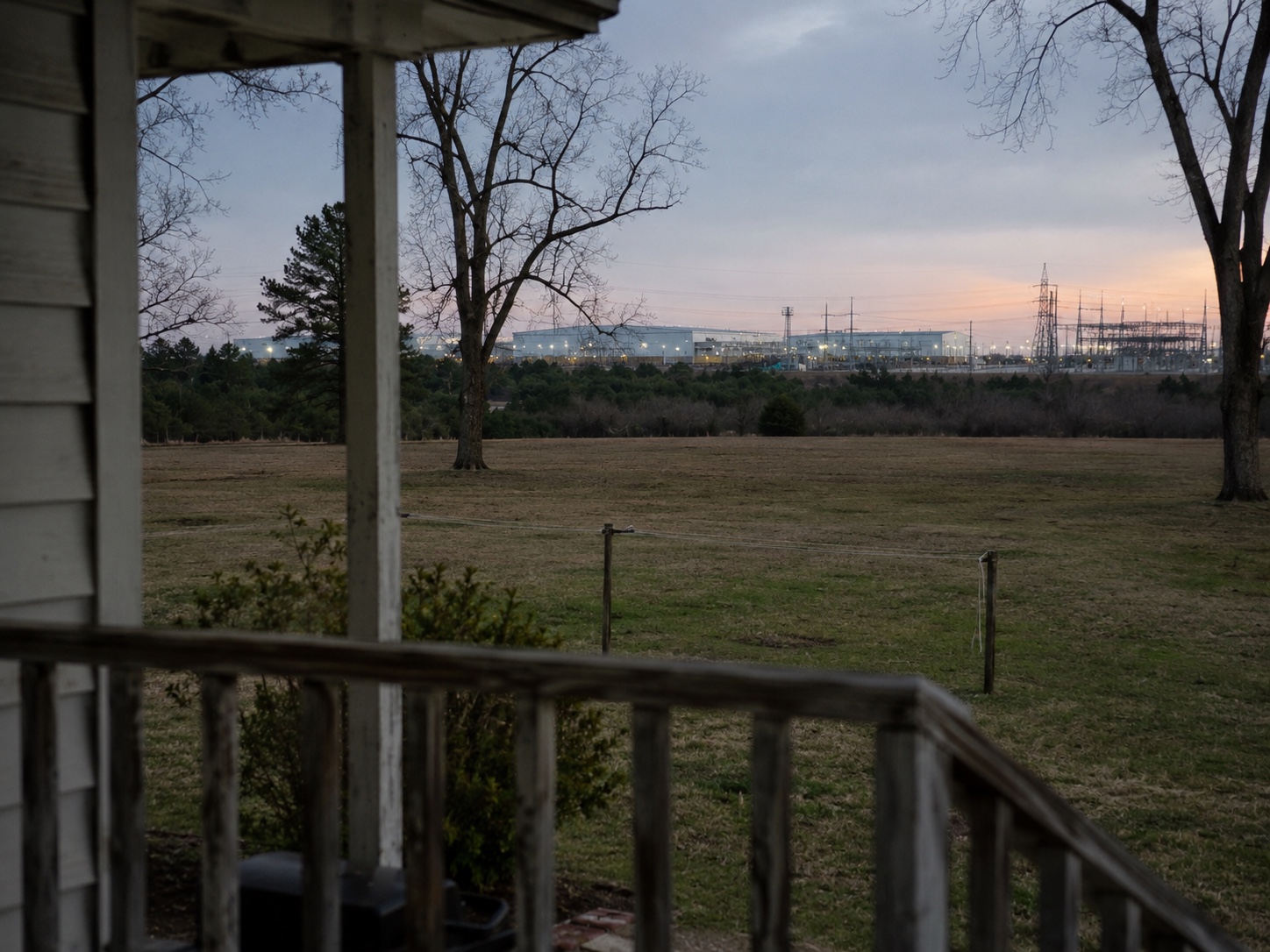
- Visual scale. A multi-million-square-foot industrial campus, transformer yards, cooling towers, and security fencing on what is currently contiguous timber.
- Resale and rental. Whatever the property-value number turns out to be, it is set by what buyers and renters will accept. The above changes are what they will be deciding on.
What you protect when you fight this.
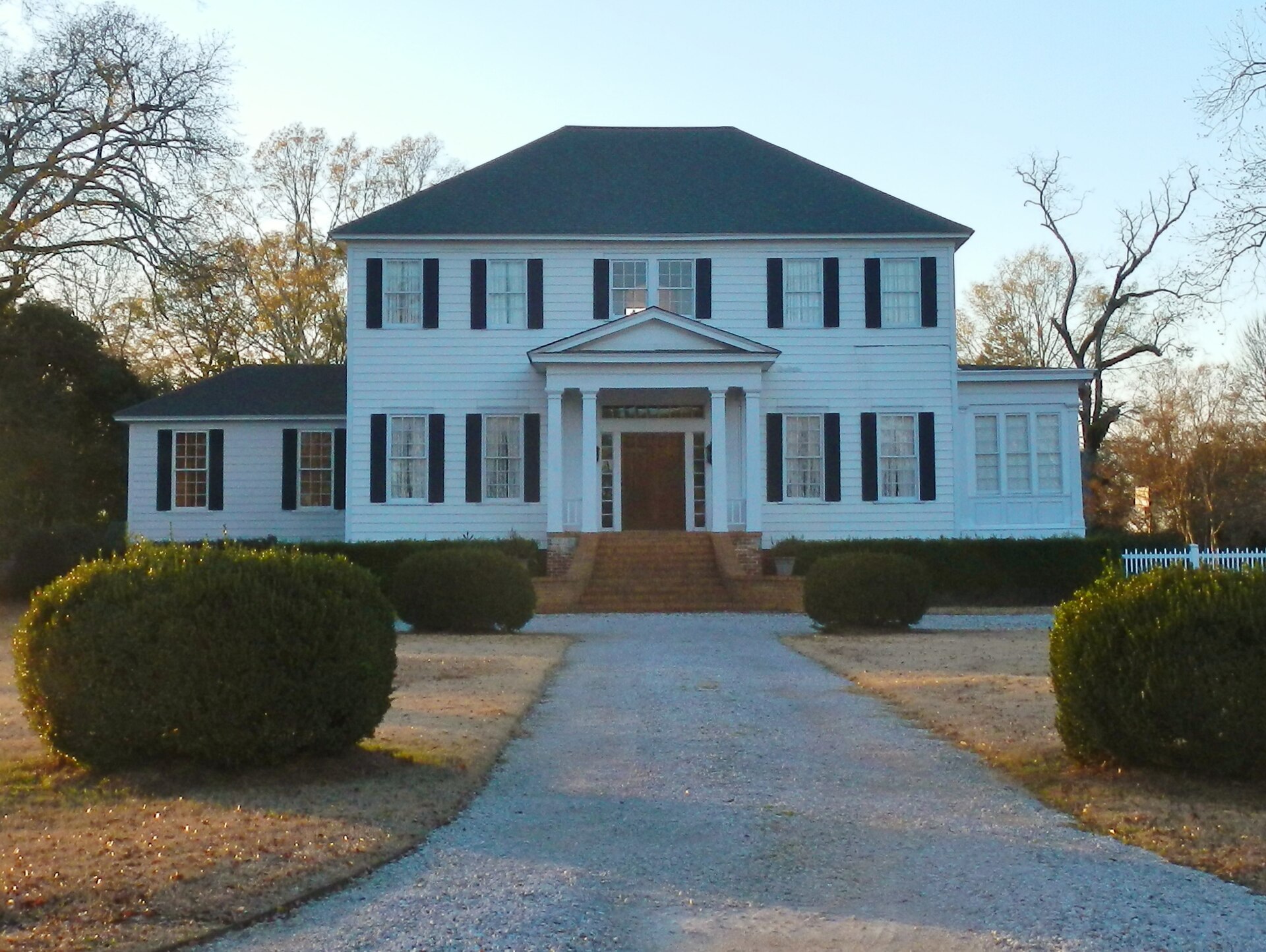
The Lowndes County of Lowndesboro's historic district, the Hayneville town square, the Burkville cafe, and the working farms that surround them — none of those came from a tech-company press release. They were built and maintained by generations of residents. That place has a value that doesn't show up in a hyperscale pitch deck. Defending it is what #45strong is for.
The question for the Commission.
- A property-line noise model in decibels and an exterior lighting specification.
- A traffic study covering U.S. 80 and AL 21, both construction and operations phases.
- A view-impact analysis from each named residence within the two-mile radius.
- A binding clause that holds the eventual operator to the conditions on which the project was approved.