What residents next door report.
U.S. News & World Report, April 2026: residents of Northern Virginia and rural Michigan, living near hyperscale data centers, describe the experience as “living in hell.” The reported symptoms cluster: constant white noise audible inside the home, sleep disturbance, headaches, vertigo, ear pain, hypertension.H1 EESI's research links sustained noise exposure above 65 decibels to elevated stress and blood pressure.H2
The noise is not a side effect. It's the operating profile.
Hyperscale data centers run 24 hours a day, 365 days a year. The cooling load is enormous and constant — banks of industrial chillers and air handlers run continuously. Generators are tested weekly. Outside the property line, the result is a continuous low-frequency hum that travels further than higher-pitched noise and that residential walls do not block. People do not get used to it.
Diesel backup generators — the underrated harm.
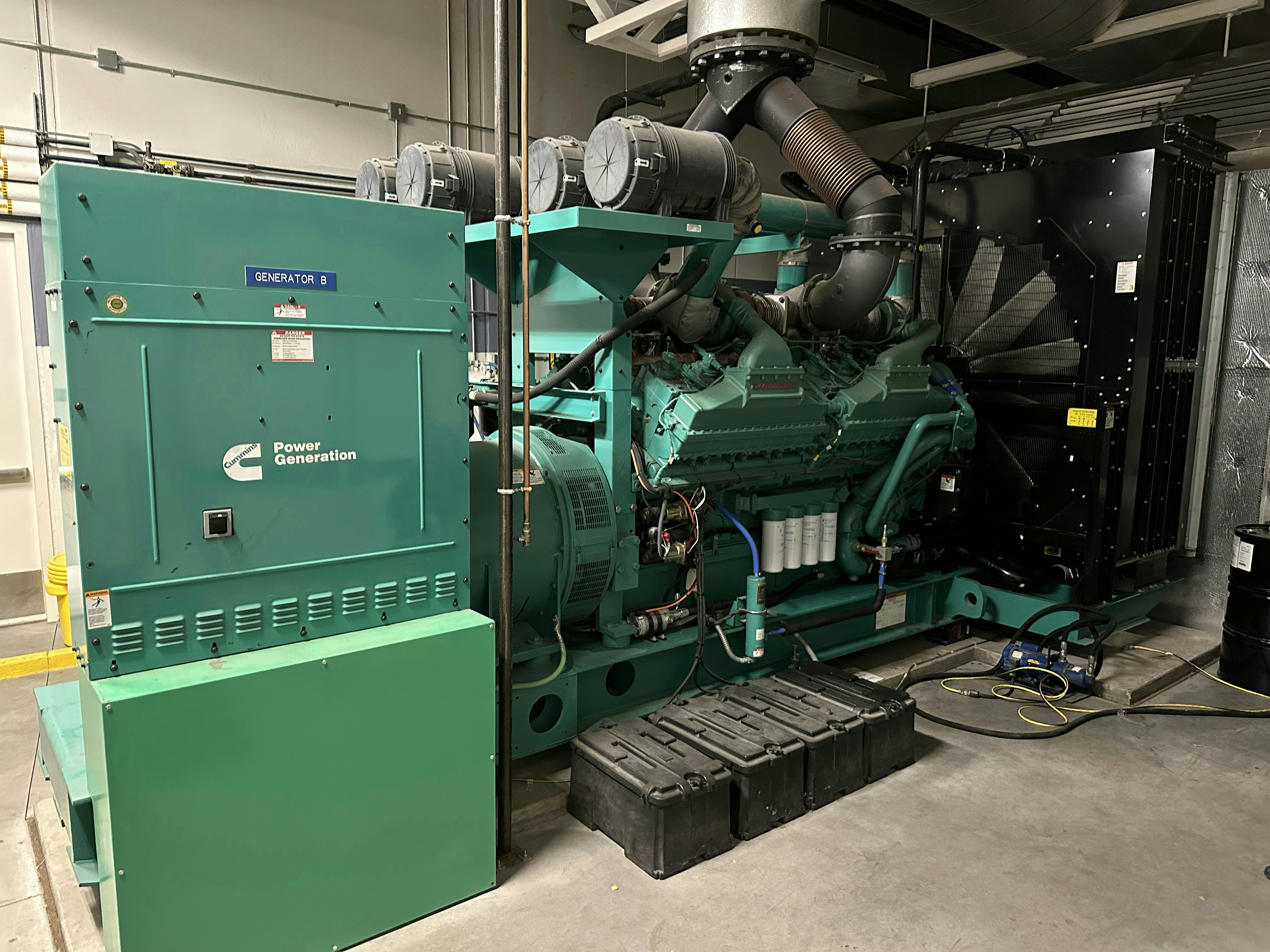
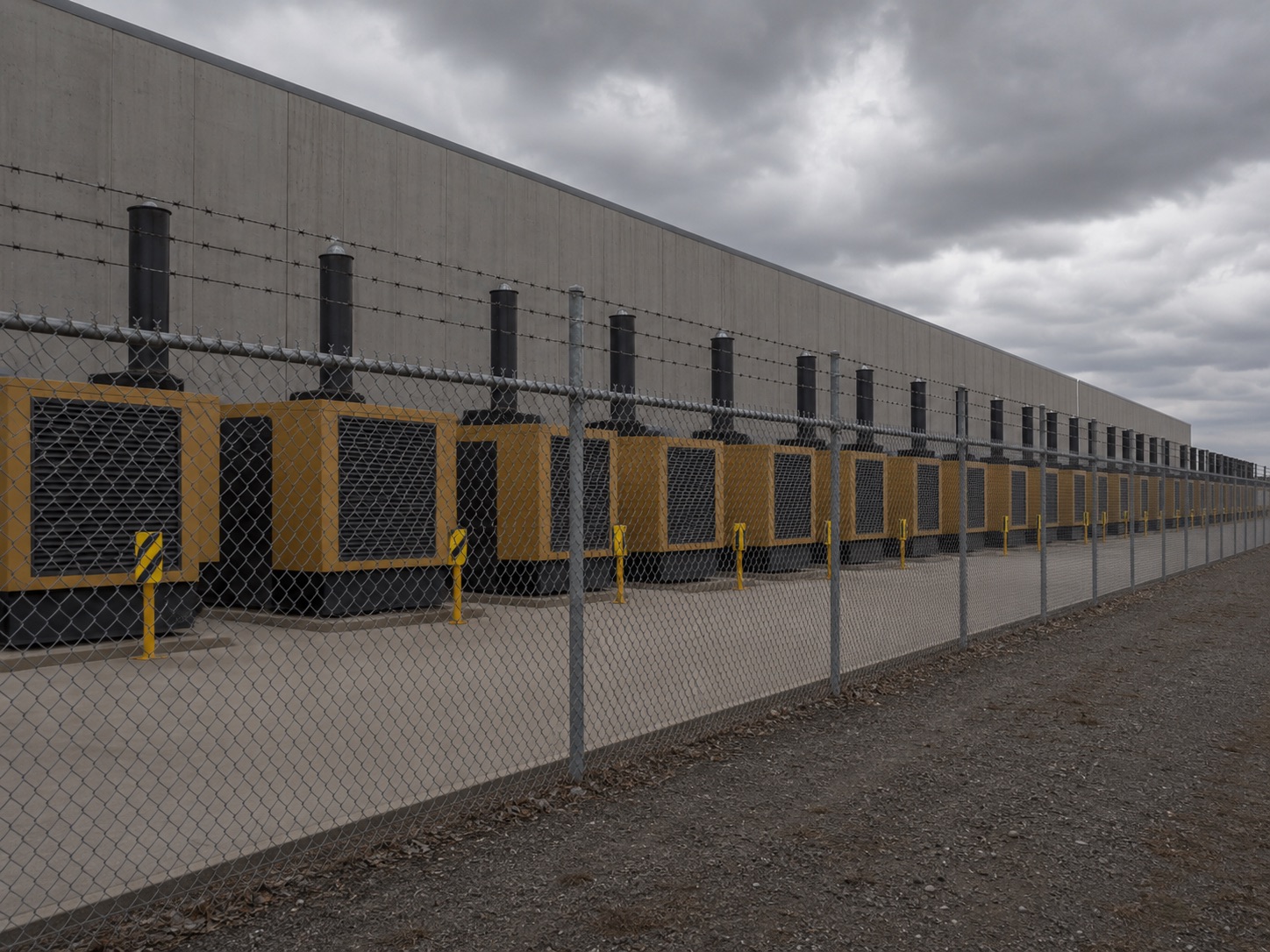
Most hyperscale data centers maintain large fleets of diesel backup generators on-site to ride through grid outages. The Center for Biological Diversity, petitioning California regulators in April 2026, documents that diesel backup generators emit 200 to 600 times more nitrogen oxides than equivalent natural-gas generation.H4 NOx is a precursor to ground-level ozone and particulate matter — both linked by the EPA to respiratory disease, asthma, and cardiovascular harm.
During an extended grid outage, a single hyperscale facility can emit its full annual permitted NOx load in a matter of days — the “health earthquake” described by California researchers. Project Red Clay's filing does not specify the size of the on-site generator fleet, the diesel storage capacity, or the emissions modeling under outage conditions.
The economic cost of the health harm.
Fortune, April 2026, citing UC research: data centers are imposing an estimated $25 billion per year in hidden health and environmental damage on the U.S. economy. The same researcher projects respiratory health costs from data centers alone reaching $20 billion per year by 2028.H5
These costs do not appear on Cloverleaf's pitch slides. They appear on residents' insurance bills, on hospital balance sheets, and in the asthma-rescue prescriptions filled at Hayneville's pharmacies.
The question for the Commission.
- The decibel level at the property line, modeled and measured. Compared against the homes within two miles.
- The size and capacity of the on-site diesel backup generator fleet.
- The NOx and PM2.5 emissions modeled under outage conditions.
- The nighttime ambient-light specification at the property line.